AR & VRDevelopment

Immersive technology opens new ways to tell stories and create experiences

We're interactive

Rocket 5 brings decades of game development experience to AR and VR projects, we build experiences that feel intuitive, run reliably, and hold up in the real world.

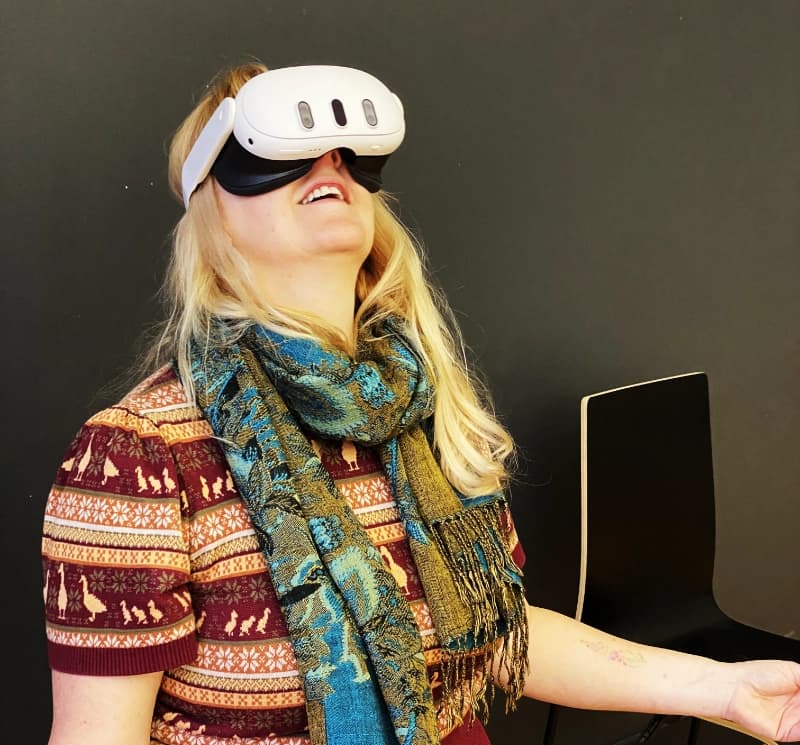
Person wearing VR headset experiencing immersive technology

We design and develop immersive experiences that are as solid technically as they are compelling to use.

What We Do

AR Experiences For Real Spaces

Mobile AR and location based experiences that are stable, readable, and designed for messy lighting, busy environments, and first time users. Great for activations, exhibits, and public facing experiences.

VR Experiences That Feel Good To Use

Comfort first interaction design, clear onboarding, and performance tuned builds that stay smooth. We build VR experiences for training, education, storytelling, and exploration.

Prototyping & Interaction Design

We turn ideas into testable prototypes quickly, validate interaction patterns early, and lock scope before you commit to full production. The goal is fewer surprises, better decisions, and faster progress.

Production Ready Builds & Optimization

Frame rate, load times, input, and stability, we treat these as core product requirements. We optimize content and systems so the experience remains responsive and comfortable across target hardware.

3D Content & Visual Direction

Art direction, animation, and 3D asset support for immersive projects. We help define a look that supports the experience, not fights it.

Installation & Event Delivery Support

Experiences built for public use, including kiosk mode patterns, safety considerations, QA for on site conditions, and operational guidance so the experience can run reliably during an event or exhibition.

Systems Integration & Custom Tech

When an experience needs more than a standalone app, we can integrate sensors, web services, and custom pipelines. This is where game style engineering pays off, robust systems, clear tooling, and maintainable architecture.

In development · iPhone AR

AR That Responds to the Person in Front of the Camera

Our current AR client project, an unreleased iPhone experience built in Unity, turns hand and face gestures into effects that wrap around the player. It combines computer vision tools that are rarely used together and runs them as one real-time system on a phone.

  • Hands, read every frame

    Google's MediaPipe finds 21 landmarks on each hand from the front camera, on the device. We wrapped it in our own reusable gesture library that recognizes poses and movement.

  • Faces and head movement

    ARKit's 52 facial blend shapes, plus head position and rotation, let the app detect expressions such as smiles and head gestures alongside the hands.

  • Hands and face in one space

    MediaPipe's 2D hand data and ARKit's 3D face data are mapped into a shared screen space, so a gesture can depend on both, such as a hand raised near the face.

  • Effects behind the player

    A native iOS plugin passes Apple Vision person masks into the renderer. With people occlusion, effects wrap behind and around the player instead of sitting on top of the camera image.

  • Rendering built around the body

    Custom render graph features in Unity's Universal Render Pipeline add depth-based occlusion, silhouette glows and scene dimming that follow the player's outline, while VFX Graph effects and layered sound react to how their hands move.

  • Graded, not just detected

    Every gesture runs through its own state machine and is scored on timing and quality against a rhythm, so the experience can tell a great move from a near miss.

Stack
  • Unity 6
  • AR Foundation
  • ARKit face tracking
  • MediaPipe hand tracking
  • Apple Vision
  • URP Render Graph
  • VFX Graph
  • Objective-C++ plugins
  • TestFlight

The same project, from the app side, is on our Unity and iOS app development page, alongside a wellness app that pairs Apple Watch heart data with real-time voice.

Released

AR and VR You Can Try

iPhone AR · ARKit · App Store

AR Race Car

Our own augmented reality app puts realistic race cars on your table, floor or street. ARKit finds real surfaces to drive on, and one slider scales the car from desk toy to full size across a 66× range without changing how it handles. It has been downloaded more than 41,000 times.

Players pull off burnouts that leave skid marks and tire smoke on real surfaces, hear engine and tire sound that follows the throttle, and switch between Street, Race and Drift setups. Read the AR Race Car case study.
AR Race Car app artwork, a green race car driving out of an iPhone screen
VR · Meta Quest · Art project

Birb Watching

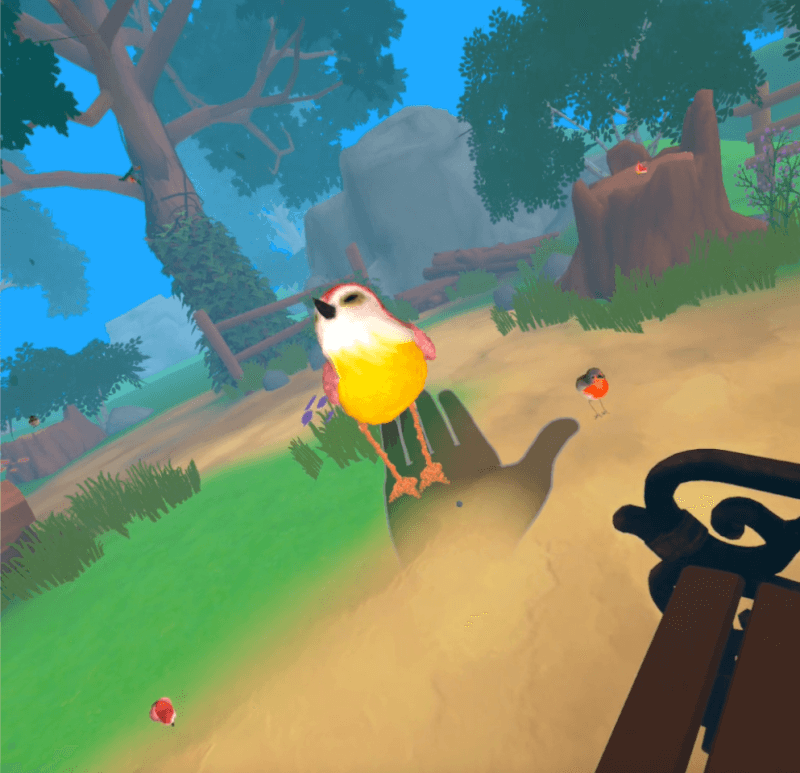
A gentle bird-watching experience in VR by artist Cat Feraday Miller, made with the support of the Ontario Arts Council. Every bird began as a needle-felted sculpture made from local wool on Amherst Island, Ontario.

We scanned the sculptures with photogrammetry, then digitized, reconstructed and animated them and released them into a virtual wild where players watch them up close, and a bird may land on an outstretched hand. Tim Miller and Corrie Shea-Pelletier were the technical artists and game developers. Watch Birb Watching.

A needle-felted bird perched on the player's hand in the Birb Watching VR forest
How we build

Immersive Apps That Hold Up

A demo that works once in the office is easy. An AR or VR app that works for a stranger, in their room, on their device, takes planning from the first week.

  1. 01

    Prototype on the real device

    Tracking, lighting and comfort only show up on the hardware people will use. We get ideas running on a phone or headset early, before the art is finished, so the risky parts are proven first.

  2. 02

    Onboard people into the experience

    Most people have never used an app like yours. Our current AR app frames and calibrates the player before it starts and waits for the AR camera to settle, so the first moment works.

  3. 03

    Design for real spaces

    Rooms are cluttered and lighting changes. AR Race Car scans for real surfaces before you drive and keeps the car level and on the surface as the phone moves, and in our current AR app people occlusion lets effects pass behind the player instead of floating on top of them.

  4. 04

    Hold the frame rate

    A smooth frame rate is a comfort requirement in VR and a credibility requirement in AR. We profile early and keep rendering, effects and assets inside a budget for the target hardware.

  5. 05

    Test it like a game

    More than 1,700 automated tests cover the gesture logic, grading and timing in our current AR app, and builds go to testers through TestFlight long before anything reaches the App Store.

Game engineering underneath

AR and VR are real-time 3D, the same craft as games, and we have shipped games since our days on AAA teams at LucasArts and Crystal Dynamics, from Cartoon Network's Knit Wits to our own The Phantom P.I. That is where the stable systems, clear tools and tuned performance come from. See our game development work.

We build immersive experiences for museums, education, creative installations, marketing activations, and entertainment. From mobile AR apps to room-scale VR experiences, we focus on projects that need to be intuitive and reliable.

Yes. AR Race Car, our own iPhone app on the App Store, uses ARKit to find real surfaces in your room and puts realistic race cars on them, at any size from desk toy to full size, with soft shadows, tire smoke and skid marks. It has been downloaded more than 41,000 times. We are also building an unreleased AR experience for a client that is driven by hand and face tracking.

Yes. In our current client app, Google's MediaPipe tracks 21 landmarks on each hand, ARKit reads 52 facial blend shapes plus head movement, and both are mapped into one screen space so a gesture can combine them. Each gesture is graded on timing and quality, not just detected.

People occlusion lets virtual objects pass behind a real person instead of always drawing on top of them. Without it, effects look pasted onto the camera image. We feed Apple Vision person masks into Unity's renderer through a native iOS plugin, so effects wrap around the player convincingly.

Both. Our current client AR app is built in Unity 6 with AR Foundation, ARKit and custom native iOS plugins, which suits rich effects and interaction. AR Race Car is built in Unity on Apple's ARKit. We recommend the approach that fits your platforms, your team and how the app will be maintained.

Yes. Birb Watching, a VR art project supported by the Ontario Arts Council, takes needle-felted birds through photogrammetry into a virtual forest on Meta Quest. We design VR for comfort first, with clear onboarding and a steady frame rate.

We develop for iOS and Android (ARKit, ARCore), Meta Quest headsets, and custom installations. We choose the right platform based on your audience and goals.

Yes. We work across concept development, 3D asset creation, interaction design, and technical implementation. You get a cohesive experience without coordinating multiple vendors.

Yes. We can add AR features to your existing mobile app or create web-based AR experiences that work directly in the browser without requiring a separate download.

The best experiences feel natural and purposeful. They solve a real problem or create genuine value, they run smoothly on target hardware, and they are intuitive enough that users do not need instructions.

Performance is designed in from the start, not bolted on later. We profile early and often, optimize assets for target hardware, and make tradeoffs that prioritize smooth interaction over visual excess.

On real devices, from the first prototype. We also write automated tests alongside the code: our current AR app has more than 1,700 covering gesture logic, grading and timing. Builds go to testers through TestFlight before App Store submission.

Yes. We often start with quick prototypes to test ideas, validate technical feasibility, and get stakeholder buy-in before committing to a full production build.

Yes. We can provide maintenance, updates for new OS versions and devices, analytics review, and iterative improvements based on real user feedback.

Common
Questions

Case Studies

VIEW MORE WORK →

Get

In Touch

Your partner for modern websites, apps, games and immersive experiences. Let's talk about how we can work together.